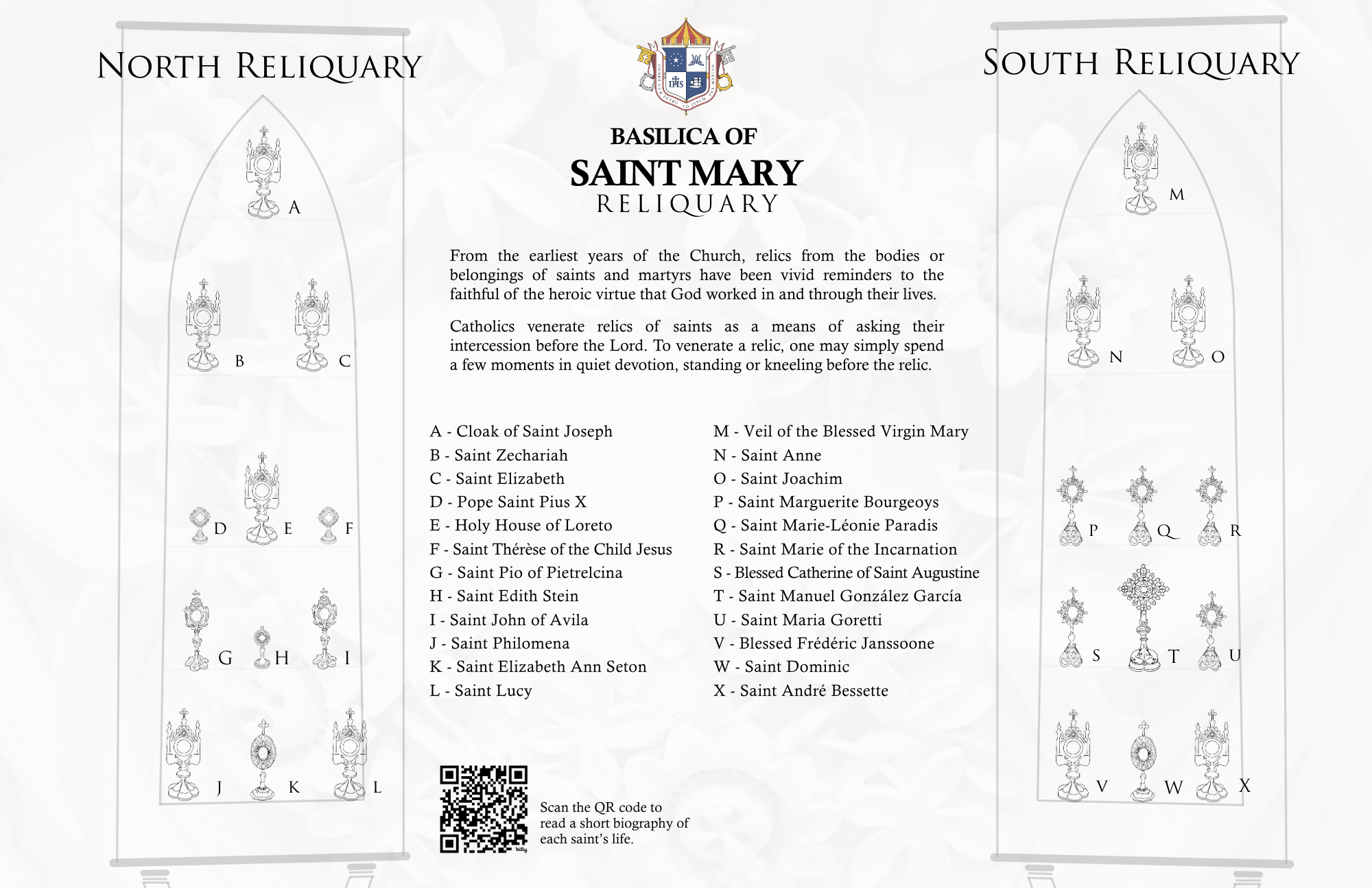
All the Relics Located in the Basilica’s Reliquary Cabinets
Saint Philomena, Virgin and Martyr
Birth: traditionally dated c. 291 AD, Greece or Rome
Death: c. 304 AD, Rome
Saint Philomena is one of the most mysterious and beloved saints of the modern Catholic world, though very little can be historically verified about her life. Her story emerged in 1802 when the remains of a young girl were discovered in the Catacombs of Priscilla along the Via Salaria in Rome. The tomb bore the inscription “Pax Tecum Filumena” (“Peace be with you, Philomena”), along with symbols of martyrdom including an anchor, arrows, and a palm branch. The relics were transferred in 1805 to Mugnano del Cardinale near Naples, where devotion to the young martyr spread rapidly because of numerous reported miracles.
According to traditions that developed after the discovery of her tomb, Philomena was the daughter of a Greek king who converted to Christianity. She reportedly consecrated her virginity to Christ at a young age. During the persecutions under the Roman emperor Diocletian, she was brought to Rome and pressured to marry the emperor. When she refused, she endured brutal tortures, including scourging, being thrown into the Tiber with an anchor around her neck, being shot with arrows, and finally execution by beheading. Though these accounts come primarily from later private revelations rather than early historical records, they deeply shaped popular devotion to her.
Throughout the nineteenth century, Saint Philomena became known as the “Wonder Worker.” Great saints such as Saint John Vianney strongly promoted devotion to her, attributing miraculous cures and spiritual favors to her intercession. Pilgrims flocked to her shrine in Italy, and churches dedicated to her appeared throughout Europe and the Americas. Although questions about the historical evidence surrounding her life led to her feast being removed from the universal liturgical calendar in 1961, devotion to Saint Philomena remains vibrant today.
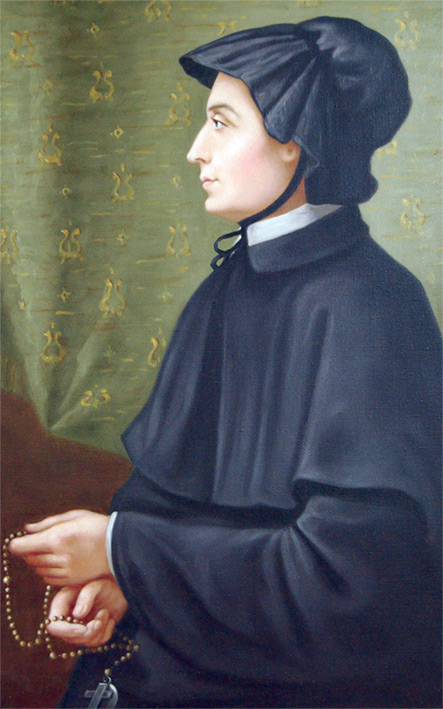
Saint Elizabeth Ann Seton, American Catholic saint
Birth: August 28, 1774, New York City, New York
Death: January 4, 1821, Emmitsburg, Maryland
Saint Elizabeth Ann Seton was the first native-born citizen of the United States to be canonized by the Catholic Church and is considered the founder of the American Catholic school system. Born into a prominent Episcopalian family in colonial New York, she was the daughter of Dr. Richard Bayley, a distinguished physician and professor. Elizabeth received an unusually strong education for a woman of her time and developed a lifelong love for Scripture, literature, and charitable service. In 1794 she married the wealthy merchant William Magee Seton, and together they became active figures in New York society while raising five children.
Financial troubles and her husband’s declining health led the Setons to travel to Italy in 1803 in hopes that the warmer climate would aid his recovery. William died there of tuberculosis, leaving Elizabeth a widow at the age of twenty-nine. During her stay in Italy, she encountered Catholicism through the devout Filicchi family, whose faith deeply impressed her, especially their belief in the Real Presence of Christ in the Eucharist. Despite intense opposition from family and friends, Elizabeth converted to Catholicism in 1805. Her conversion came at a significant personal cost, as anti-Catholic prejudice in the new United States limited her social and professional opportunities.
In 1809, with the support of Archbishop John Carroll, Elizabeth founded the Sisters of Charity of Saint Joseph in Emmitsburg, Maryland, the first religious community for women established in the United States. She also opened schools for girls, pioneering Catholic education in America. Her rule was based partly on that of the Daughters of Charity founded by Saint Vincent de Paul. Elizabeth endured poverty, illness, and the deaths of loved ones, yet remained deeply committed to prayer, education, and service to the poor. She was canonized in 1975 by Pope Paul VI and remains a foundational figure in American Catholic history.
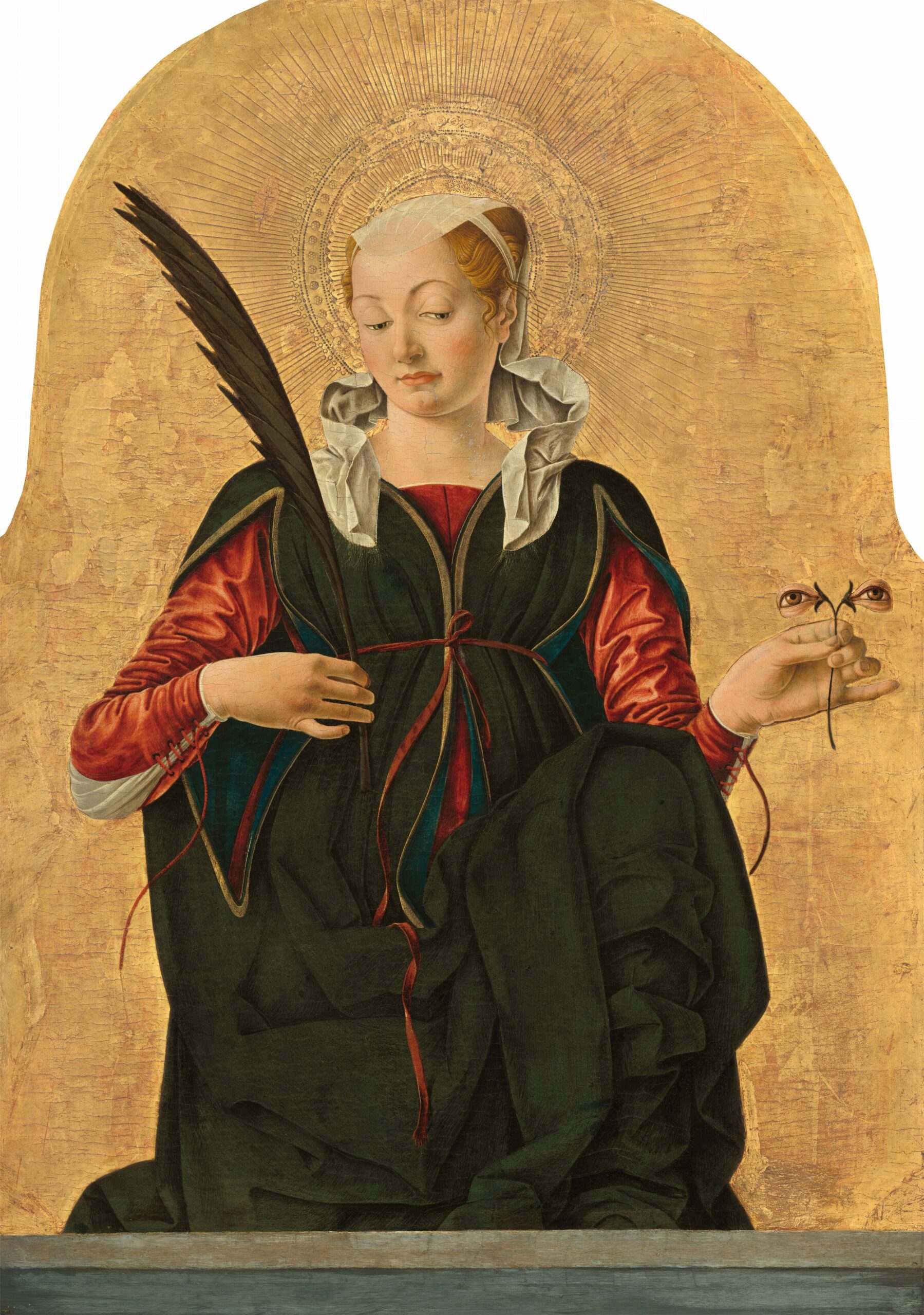
Saint Lucy, Early Christian martyr of Syracuse
Birth: c. 283 AD, Syracuse, Sicily
Death: c. 304 AD, Syracuse, Sicily
Saint Lucy, also known as Saint Lucia, was an early Christian martyr whose devotion spread rapidly throughout the ancient Church. Born into a wealthy Sicilian family during the final decades of the Roman Empire, Lucy was raised by a Christian mother named Eutychia. According to tradition, she consecrated herself to Christ and secretly vowed perpetual virginity. Her mother, however, arranged a marriage for her with a pagan suitor. During a pilgrimage to the tomb of Saint Agatha in Catania, Lucy prayed for her mother’s healing from a hemorrhagic illness, and Eutychia was reportedly cured.
After this event, Lucy persuaded her mother to allow her to distribute her dowry among the poor rather than marry. Her rejected fiancé denounced her as a Christian during the persecutions of Emperor Diocletian. Tradition recounts that Lucy was sentenced to be dragged to a brothel, but her body became immovable, even when teams of oxen attempted to move her. Various legends describe her enduring torture by fire and sword before finally dying from stab wounds. One medieval tradition claims her eyes were gouged out, which is why she is invoked as patron saint of the blind and those suffering from eye diseases.
Saint Lucy’s cult spread widely through Europe during the Middle Ages, especially in Italy and Scandinavia. Her name derives from the Latin word lux, meaning “light,” and her feast day on December 13 became associated with light during the darkest season of the year. In Sweden and other Nordic countries, Saint Lucy processions featuring girls in white robes and candle crowns remain an important cultural and religious tradition. Lucy is remembered as a courageous witness to Christian faith during one of the Roman Empire’s harshest persecutions.
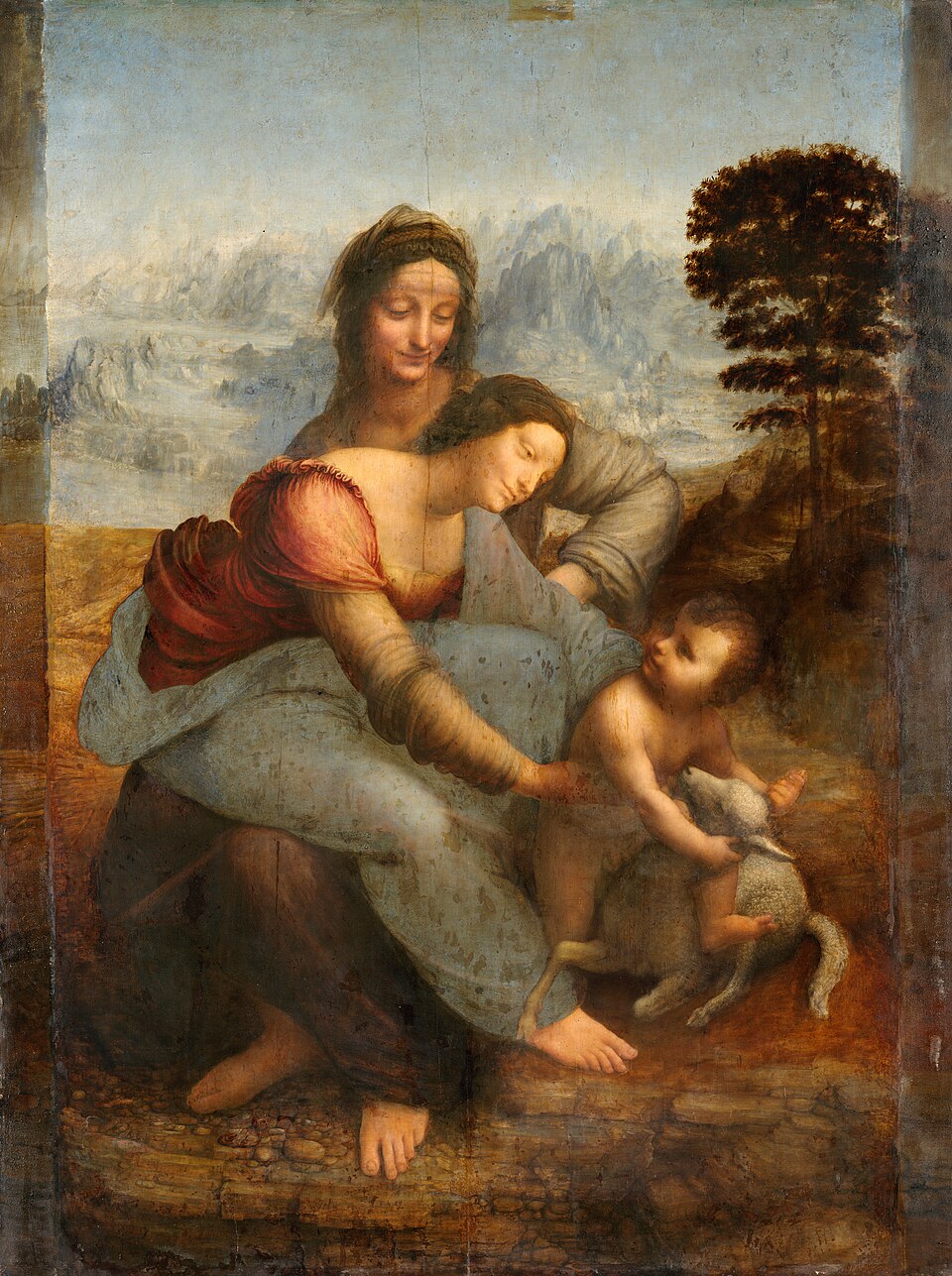
Saint Anne, Mother of the Virgin Mary
Birth: traditionally dated first century BC
Death: traditionally dated first century AD
Saint Anne is honored in Christian tradition as the mother of the Blessed Virgin Mary and the grandmother of Jesus Christ. Although she is not mentioned in the canonical Gospels, information about her life comes primarily from the second-century apocryphal text known as the Protoevangelium of James. According to this tradition, Anne and her husband Joachim were a devout Jewish couple living in Jerusalem who suffered for many years from childlessness, which in ancient Jewish society was often viewed as a source of shame.
The tradition recounts that Joachim withdrew into the wilderness to pray and fast after being publicly humiliated at the Temple because he had no children. Meanwhile Anne prayed fervently for a child and received an angelic message promising that she would conceive. Their daughter Mary was born after years of longing and was dedicated by her parents to the service of God. Anne and Joachim are therefore regarded as important figures in salvation history because they prepared Mary to become the mother of Jesus.
Devotion to Saint Anne developed in both Eastern and Western Christianity during the Middle Ages. Churches and shrines dedicated to her appeared throughout Europe, and she became especially revered in France, Quebec, and parts of the Americas. She is commonly invoked as the patron saint of mothers, grandmothers, pregnant women, and families. Artistic depictions often show her teaching the young Mary to read the Scriptures, symbolizing the transmission of faith across generations.
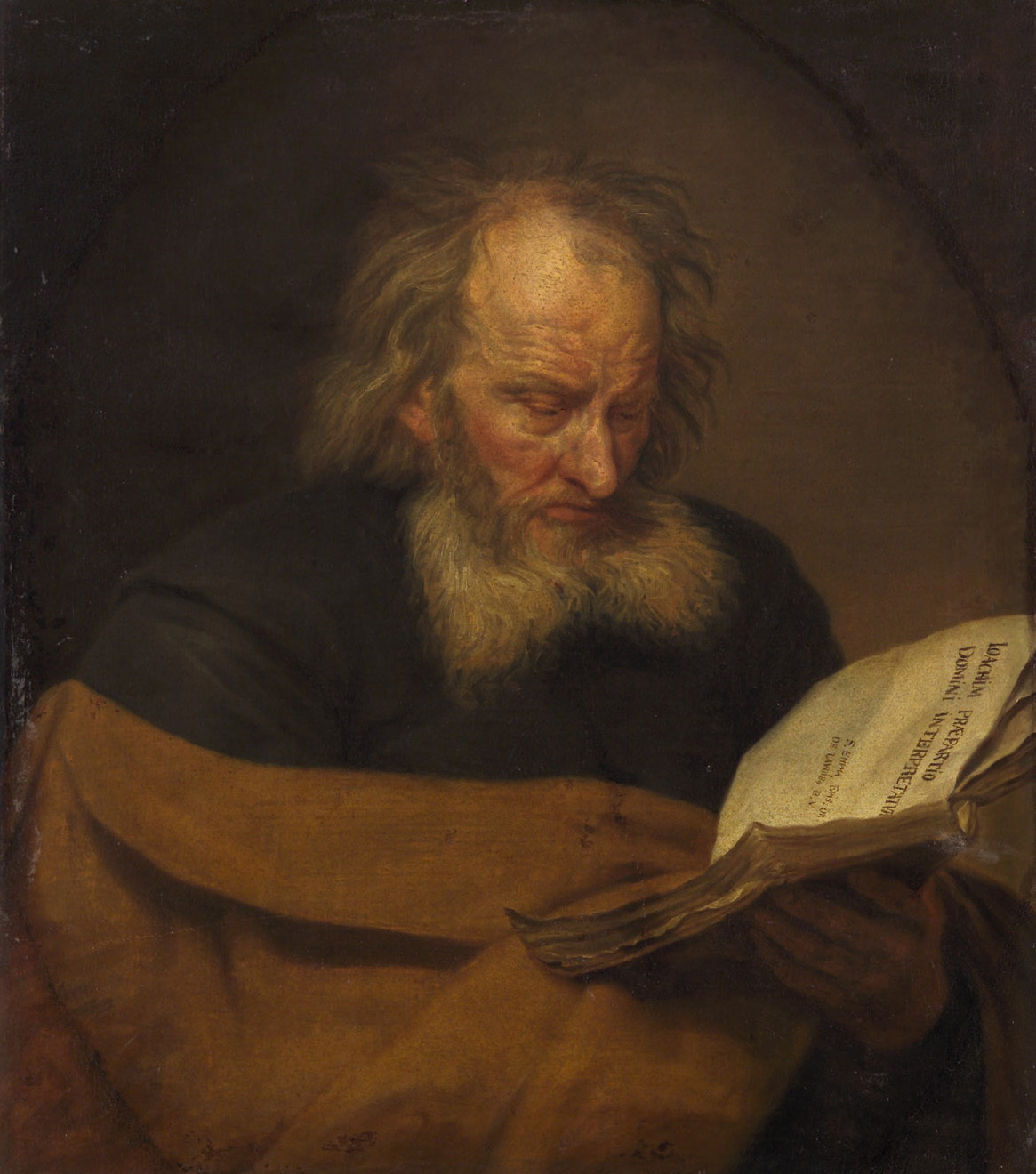
Saint Joachim, Father of the Virgin Mary
Birth: traditionally dated first century BC
Death: traditionally dated first century AD
Saint Joachim is traditionally venerated as the father of the Blessed Virgin Mary and the husband of Saint Anne. Like Anne, he does not appear in the canonical Scriptures, but his story is preserved in ancient Christian traditions, especially the Protoevangelium of James. Joachim was described as a wealthy and devout Jew who faithfully offered sacrifices at the Temple and gave generously to the poor. Despite his righteousness, he and Anne remained childless for many years.
According to tradition, Joachim once attempted to offer sacrifice at the Temple but was rejected by another worshipper who considered his childlessness a sign of divine disfavor. Deeply grieved, Joachim withdrew into the desert for forty days of prayer and fasting. There he received an angelic revelation that Anne would conceive a child blessed by God. At the same time, Anne received a similar message, and the couple joyfully reunited at Jerusalem’s Golden Gate, a scene frequently depicted in Christian art.
Joachim became revered throughout Christendom as a model of patient faith and paternal devotion. Medieval Christians looked to him as an example of perseverance through suffering and trust in God’s providence. Together, Joachim and Anne are celebrated as the grandparents of Jesus and patrons of grandparents and married couples. Their feast day reflects the Church’s recognition of the hidden but profound role of family life in salvation history.
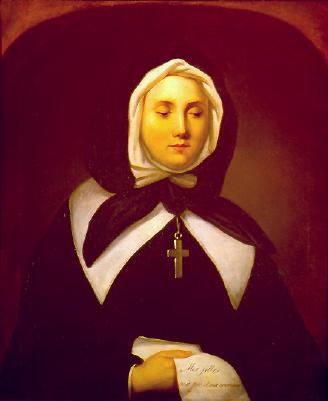
Saint Marguerite Bourgeoys, Founder of the Congregation of Notre Dame of Montreal
Birth: April 17, 1620, Troyes, France
Death: January 12, 1700, Montreal, New France
Saint Marguerite Bourgeoys was a pioneering educator and missionary who helped shape the spiritual and cultural life of early Canada. Born into a large middle-class family in Troyes, France, she was deeply influenced by the religious revival of seventeenth-century French Catholicism. At age twenty she experienced a profound spiritual conversion while participating in a Marian procession, after which she dedicated herself to a life of service. She joined a sodality associated with the Congregation of Notre Dame in Troyes and became involved in teaching poor children.
In 1653 Marguerite accepted an invitation from Paul de Chomedey de Maisonneuve, founder of Ville-Marie, later Montreal, to travel to New France. The colony was still small and dangerous, threatened by disease, harsh winters, and conflict with the Haudenosaunee Confederacy. Marguerite established schools for French settlers, Indigenous children, and the daughters of laborers and soldiers. Unlike cloistered religious communities of the era, her sisters lived active lives among the people, traveling where educational needs existed.
In 1671 she founded the Congregation of Notre Dame of Montreal, a non-cloistered religious community devoted to education. Marguerite also established the first school in Montreal and helped preserve social stability in the struggling colony through her charitable work and leadership. She died in 1700 after reportedly offering her life to God in exchange for the recovery of a sick younger sister. Canonized in 1982 by Pope John Paul II, she is recognized as one of the founders of the Canadian Church and a central figure in the history of Catholic education in North America.
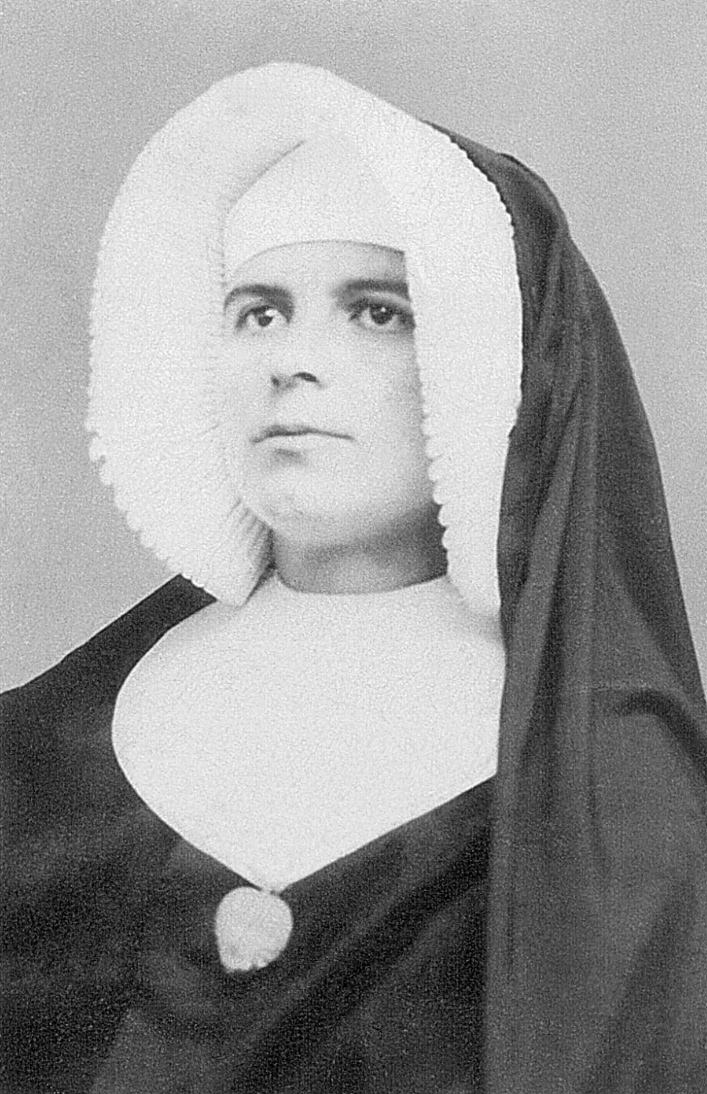
Saint Marie-Leonie Paradis, Canadian religious founder
Birth: May 12, 1840, L’Acadie, Quebec
Death: May 3, 1912, Sherbrooke, Quebec
Saint Marie-Leonie Paradis, born Alodie-Virginie Paradis, was a Canadian religious sister who devoted her life to humble service and the dignity of domestic labor within religious institutions. Raised in rural Quebec in a deeply Catholic farming family, she entered the Sisters of the Holy Cross at the age of fourteen. As a young religious she taught in schools and later served in communities connected to the Congregation of Holy Cross in Canada and the United States.
While working in colleges and seminaries, Marie-Leonie observed that many priests and educators were overwhelmed by practical domestic responsibilities. She believed that communities dedicated specifically to cooking, laundry, maintenance, and hospitality could free clergy and teachers to focus more fully on ministry and education. Guided by this vision, she founded the Little Sisters of the Holy Family in 1880 in Memramcook, New Brunswick. The congregation emphasized humility, hidden service, simplicity, and spiritual dedication.
Despite financial hardships and internal opposition, Marie-Leonie persevered in establishing her community across Canada and eventually beyond. The Little Sisters served in seminaries, schools, hospitals, and diocesan institutions, carrying out essential but often unnoticed work. Marie-Leonie became known for her gentleness, deep Eucharistic devotion, and practical wisdom. She was canonized in 2024 by Pope Francis, and is recognized for elevating ordinary labor as a path to holiness and service within the Church.
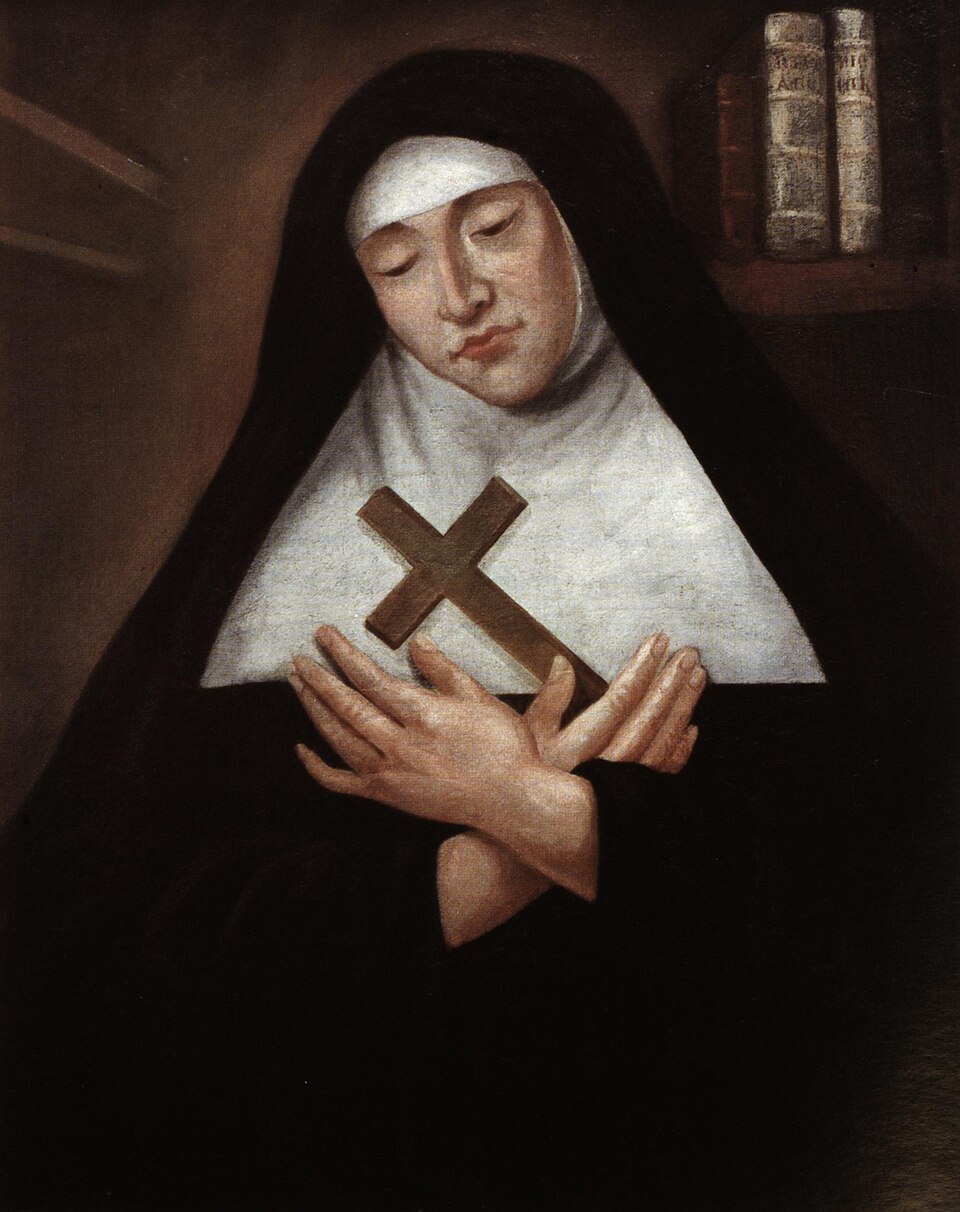
Saint Marie of the Incarnation, French Ursuline missionary in Canada
Birth: October 28, 1599, Tours, France
Death: April 30, 1672, Quebec City, New France
Saint Marie of the Incarnation, born Marie Guyart, was a great mystic and missionary of the seventeenth century and a foundational figure in the Catholic history of Canada. Raised in Tours, France, she married Claude Martin at age seventeen and was widowed only two years later with a young son. After years of working in the family business and discerning her vocation, she entered the Ursuline convent in Tours in 1631, taking the religious name Marie of the Incarnation.
Marie experienced profound mystical visions throughout her life, including what she believed was a divine call to evangelize New France. In 1639 she traveled to Quebec with a group of Ursuline sisters and established the first Ursuline monastery in North America. There she dedicated herself to educating French and Indigenous girls, learning Indigenous languages including Algonquin and Iroquoian dialects in order to teach more effectively. She composed catechisms, dictionaries, and educational texts in several languages.
Her extensive correspondence, especially with her son Claude Martin, provides historians with invaluable insight into colonial Canada, missionary work, and seventeenth-century spirituality. Marie endured fires, harsh conditions, political instability, and the challenges of frontier life while remaining committed to education and evangelization. Canonized in 2014 by Pope Francis through equipollent canonization, she is remembered as the “Mother of the Canadian Church” and as one of the most important female missionaries in North American history.
Blessed Catherine of Saint Augustine, French Augustinian missionary nurse
Birth: May 3, 1632, Saint-Sauveur-le-Vicomte, France
Death: May 8, 1668, Quebec City, New France
Blessed Catherine of Saint Augustine, born Catherine de Longpré, was a French Augustinian nun and missionary who devoted her life to caring for the sick in colonial Canada. From childhood she demonstrated remarkable piety and expressed a desire for religious life. At age twelve she entered the Augustinian convent in Bayeux and later volunteered for the dangerous mission to New France, arriving in Quebec in 1648 when she was only sixteen years old.
Catherine served at the Hôtel-Dieu de Québec, one of the earliest hospitals in North America. The colony faced constant hardships including epidemics, food shortages, and military conflict. Catherine worked tirelessly among French settlers, soldiers, and Indigenous peoples suffering from disease and injury. She became known for her compassion, spiritual discipline, and extraordinary mystical experiences. Her spiritual writings describe intense struggles against temptation and periods of profound mystical union with God.
One of the most significant aspects of her life was her friendship with Bishop François de Laval, the first bishop of Quebec, whom she believed she was spiritually called to support through prayer and sacrifice. Catherine’s reputation for holiness spread quickly after her death at only thirty-six years old. Beatified in 1989 by Pope John Paul II, she is remembered as one of the founders of the Canadian Church and a model of sacrificial service in healthcare.
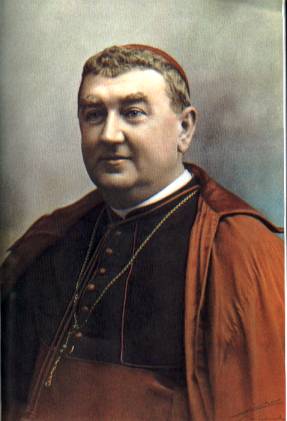
Saint Manuel González García, Bishop of the Abandoned Tabernacle
Birth: February 25, 1877, Seville, Spain
Death: January 4, 1940, Madrid, Spain
Saint Manuel González García was a Spanish bishop renowned for his intense devotion to the Eucharist and his pastoral care for the poor and neglected. Born into a large Catholic family in Seville, he entered the seminary at a young age and was ordained a priest in 1901. Early in his ministry he visited a neglected rural church where the tabernacle was dusty and largely ignored. This experience deeply affected him and inspired his lifelong mission to promote Eucharistic devotion and reverence for the Blessed Sacrament.
Father Manuel dedicated himself to catechesis, preaching, and charitable outreach, especially among poor children and rural communities. He founded schools, catechetical initiatives, and Eucharistic associations, including the Missionaries of Nazareth and the Eucharistic Missionaries of Nazareth. In 1916 he became bishop of Málaga and later bishop of Palencia. His episcopal ministry coincided with a period of intense social unrest and anti-clerical violence in Spain, particularly during the Spanish Civil War.
Despite political instability and persecution, Manuel remained devoted to pastoral ministry and Eucharistic spirituality. He wrote extensively, encouraging Catholics to rediscover the presence of Christ in the Eucharist and to cultivate personal prayer before the tabernacle. Known affectionately as the “Bishop of the Abandoned Tabernacle,” he inspired countless Catholics through his simple, accessible spirituality. Canonized in 2016 by Pope Francis, he remains an important modern example of Eucharistic devotion and pastoral zeal.
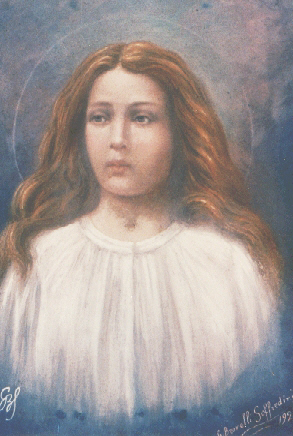
Saint Maria Goretti, Italian virgin martyr
Birth: October 16, 1890, Corinaldo, Italy
Death: July 6, 1902, Nettuno, Italy
Saint Maria Goretti was one of the youngest canonized saints in the Catholic Church and is remembered for her purity, forgiveness, and courage. Born into a poor farming family in rural Italy, Maria moved with her parents to the marshy region near Nettuno in search of work. After the death of her father from malaria, Maria helped care for her younger siblings and managed household duties while her mother worked in the fields.
The Goretti family shared a home with another impoverished family, including a young man named Alessandro Serenelli. Alessandro repeatedly made advances toward Maria, which she firmly rejected. On July 5, 1902, when Maria was only eleven years old, Alessandro attempted to assault her. She resisted and warned him that his actions were sinful. In anger he stabbed her fourteen times. Maria died the following day after forgiving her attacker and expressing her desire that he repent and join her in heaven.
Alessandro later experienced a profound conversion while in prison, reportedly after a dream in which Maria offered him lilies. He eventually became a lay brother in a Capuchin monastery and publicly testified to Maria’s forgiveness. Canonized in 1950 by Pope Pius XII in the presence of her mother, Maria became a symbol of chastity, mercy, and youthful sanctity. Her life and death continue to inspire devotion around the world, especially among young Catholics.
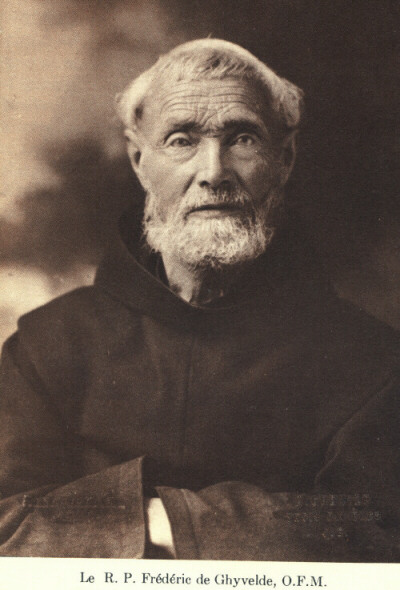
Blessed Frédéric Janssoone, Franciscan missionary priest
Birth: November 19, 1838, Ghyvelde, France
Death: August 4, 1916, Montreal, Quebec
Blessed Frédéric Janssoone was a French Franciscan priest and missionary whose work profoundly influenced Catholic life in Canada and the Holy Land. Born into a humble farming family near the French-Belgian border, he experienced hardship early in life after the death of his father. He worked to support his family before entering the Franciscans in 1864. Ordained in 1870 during the Franco-Prussian War, he soon became involved in promoting devotion to the Holy Land.
Father Frédéric served in 19th-century Palestine as commissary of the Holy Land, helping organize pilgrimages and defending the rights of Catholic shrines. He later moved to Canada in 1888, where he became widely known for preaching missions, promoting devotion to Saint Anne, and supporting Franciscan ministries. He played an important role in the development of the Shrine of Sainte-Anne-de-Beaupré in Quebec, which became one of North America’s major pilgrimage destinations.
Known for his humility, warmth, and tireless travel, Frédéric preached throughout Quebec and the northeastern United States. He also supported the colonization movement in Quebec, encouraging settlement in new rural regions. Despite poor health, he continued ministering until his death in Montreal in 1916. Beatified in 1988 by Pope John Paul II, he is remembered as a joyful missionary and promoter of pilgrimage and popular devotion.
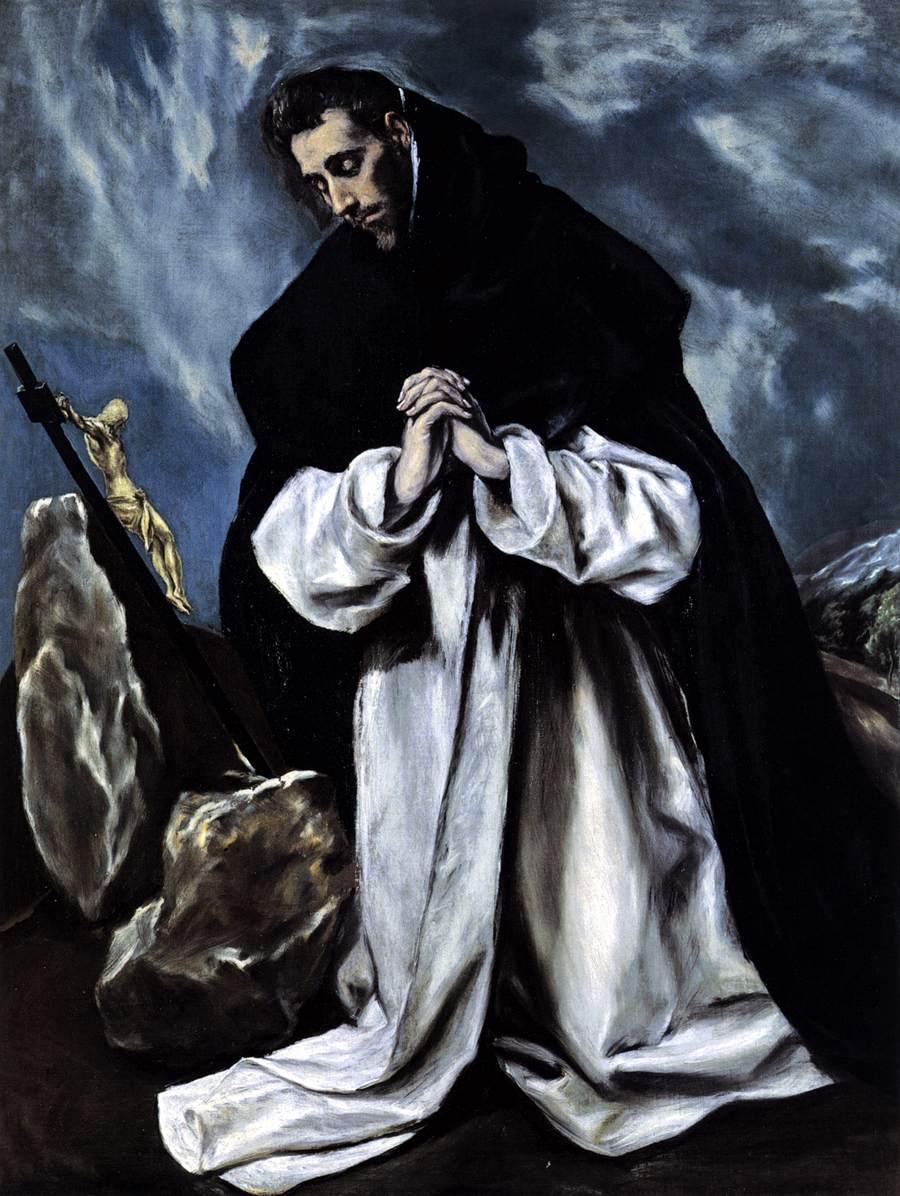
Saint Dominic, Founder of the Order of Preachers
Birth: August 8, 1170, Caleruega, Castile
Death: August 6, 1221, Bologna, Italy
Saint Dominic de Guzmán was the founder of the Order of Preachers, commonly known as the Dominicans, and one of the great reformers of medieval Christianity. Born into a noble but devout family in Castile, Spain, Dominic studied theology and philosophy in Palencia. During a severe famine he reportedly sold his books and possessions to feed the poor, declaring that he could not study from “dead skins” while people were starving. He later became a canon regular at the cathedral of Osma.
Dominic traveled through southern France at a time when the Albigensian (or Cathar) heresy was spreading widely. He observed that many Church representatives lived comfortably while heretical preachers embraced poverty and simplicity. Convinced that authentic preaching required both learning and holiness, Dominic began traveling on foot, debating heretics, preaching repentance, and living austerely. In 1216 Pope Honorius III formally approved the Order of Preachers, whose members combined rigorous theological study with active preaching.
The Dominicans rapidly became one of the most influential religious orders in the Church, establishing universities, schools, and missionary centers throughout Europe. The order produced major theologians such as Saint Thomas Aquinas and played a crucial role in medieval intellectual life. Dominic himself was known for humility, compassion, prayer, and zeal for souls. Tradition also associates him strongly with the spread of the Rosary. He died in Bologna in 1221 and was canonized only thirteen years later because of his widespread reputation for holiness.
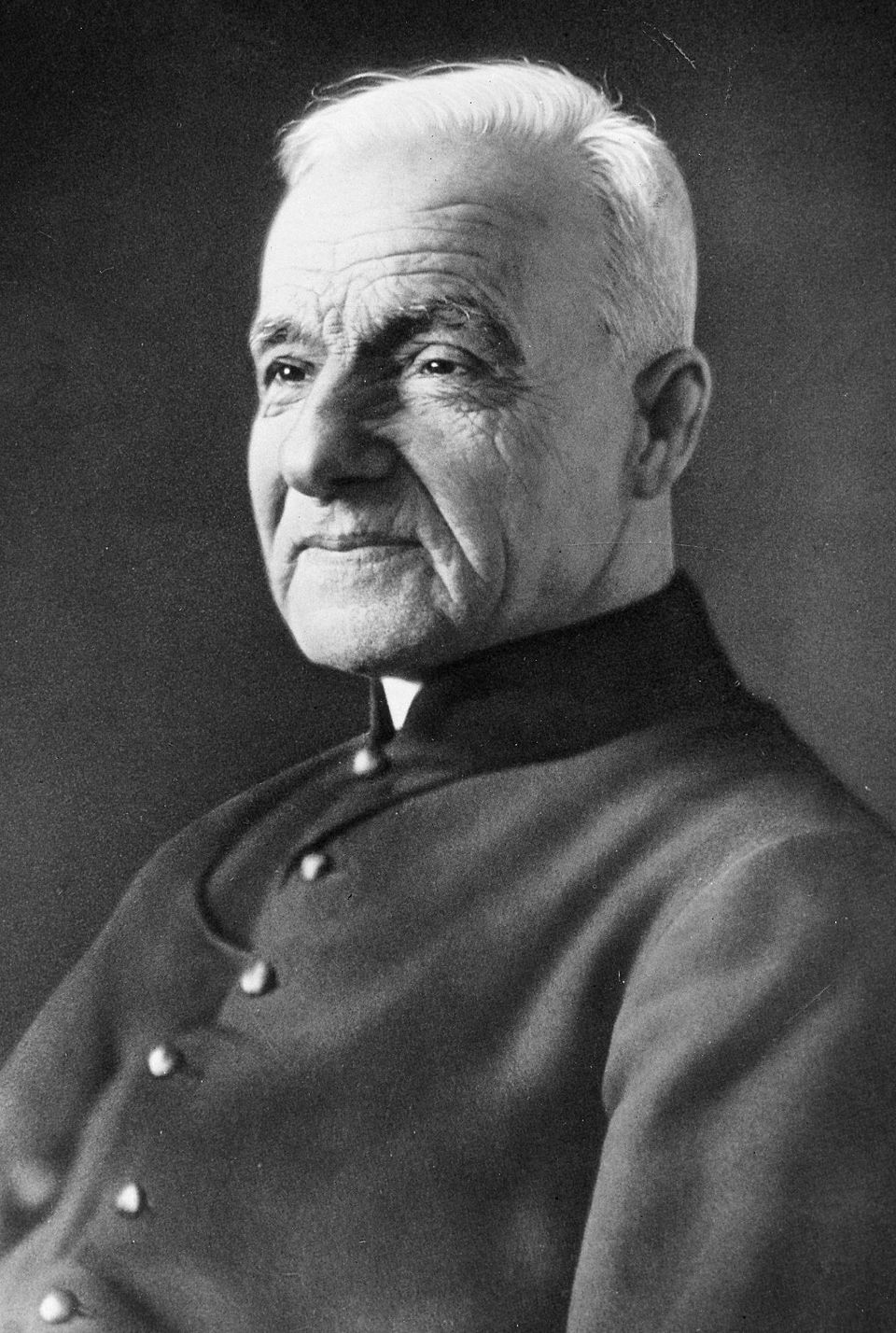
Saint André Bessette, Canadian lay brother of Holy Cross
Birth: August 9, 1845, Saint-Grégoire-d’Iberville, Quebec
Death: January 6, 1937, Montreal, Quebec
Saint André Bessette, born Alfred Bessette, became one of Canada’s most beloved holy figures despite a life marked by poverty, illness, and limited formal education. He was born into a large working-class family in Quebec and was orphaned by the age of twelve after both parents died. Frail and often sickly, Alfred worked various manual labor jobs in Canada and the United States before discerning a religious vocation with the Congregation of Holy Cross.
Because of his poor health and lack of education, superiors initially hesitated to admit him to religious life. He was eventually accepted and assigned humble duties as doorkeeper, porter, barber, messenger, and caretaker at Notre Dame College in Montreal. Brother André developed a deep devotion to Saint Joseph and encouraged visitors to pray for healing and trust in God’s providence. Reports of miraculous cures associated with his prayers and the use of oil from a lamp burning before a statue of Saint Joseph spread widely.
With support from countless pilgrims and donors, Brother André oversaw the construction of a small chapel dedicated to Saint Joseph on Mount Royal, which eventually grew into Saint Joseph’s Oratory, one of the largest pilgrimage churches in the world. Millions visited him seeking spiritual counsel and healing. When he died in 1937, over a million people reportedly paid respects to him. Canonized in 2010 by Pope Benedict XVI, Saint André Bessette remains a beloved figure of humility, faith, and confidence in the intercession of Saint Joseph.
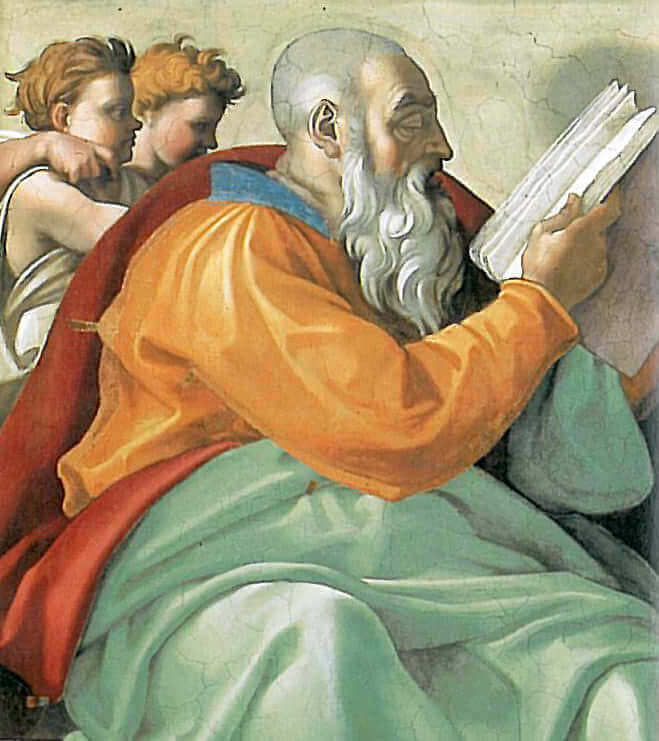
Saint Zechariah, Father of John the Baptist
Birth: traditionally dated first century BC
Death: traditionally dated first century AD
Saint Zechariah, also spelled Zachary, was a Jewish priest and the father of Saint John the Baptist. His story is recorded primarily in the Gospel of Luke. Zechariah belonged to the priestly division of Abijah, while his wife Elizabeth was also descended from the priestly line of Aaron. The couple was known for their righteousness and faithful observance of Jewish law, yet they remained childless into old age, a condition often regarded with sorrow and social stigma in ancient Jewish society.
According to Luke’s Gospel, Zechariah was serving in the Temple in Jerusalem when the angel Gabriel appeared beside the altar of incense and announced that Elizabeth would bear a son who would prepare the way for the Messiah. Because of his advanced age, Zechariah doubted the message and was rendered mute until the child’s birth. When relatives expected the child to be named after his father, Zechariah wrote that the boy’s name would be John. Immediately his speech returned, and he proclaimed the canticle known as the Benedictus, praising God for fulfilling His promises to Israel.
Christian tradition reveres Zechariah as a faithful priest who played a crucial role in salvation history through the birth and upbringing of John the Baptist. Some early traditions claim he was later martyred during the reign of Herod, though historical evidence is uncertain. His canticle remains part of the daily prayers of the Church in the Liturgy of the Hours. Zechariah is remembered as a model of patient faith and as a bridge between the priestly traditions of ancient Israel and the coming of Christ.
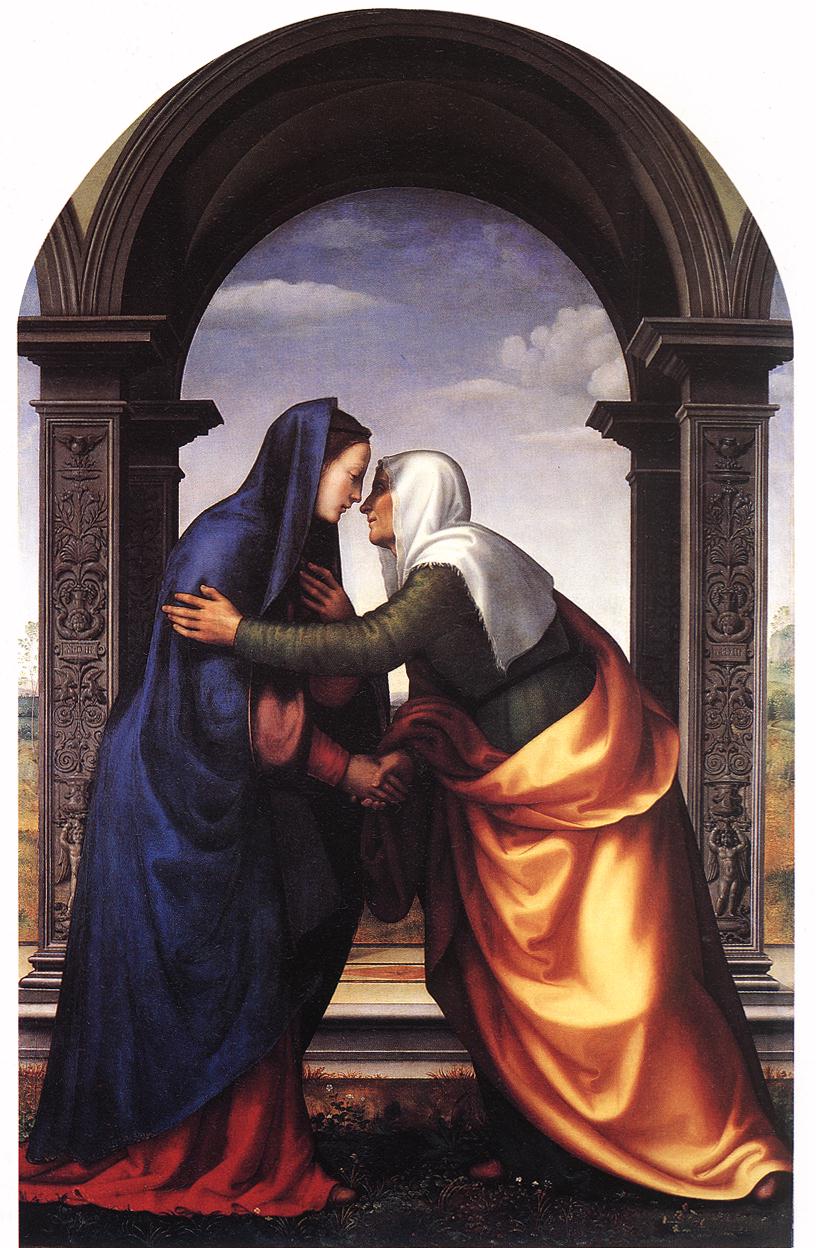
Saint Elizabeth, Mother of John the Baptist
Birth: traditionally dated first century BC
Death: traditionally dated first century AD
Saint Elizabeth was the wife of Saint Zechariah and the mother of Saint John the Baptist. The Gospel of Luke describes her as a righteous and devout Jewish woman descended from the priestly family of Aaron. Despite her holiness, Elizabeth endured years of infertility, a source of profound grief in ancient Jewish culture. Her life changed dramatically when God answered her prayers in old age by granting her a son destined to prepare the way for the Messiah.
Elizabeth’s most famous appearance in Scripture occurs during the Visitation, when the Virgin Mary visited her after the Annunciation. At Mary’s greeting, the child in Elizabeth’s womb leapt for joy, and Elizabeth, filled with the Holy Spirit, proclaimed Mary “blessed among women” and recognized her as the mother of the Lord. This event became one of the most beloved scenes in Christian art and devotion, emphasizing the meeting of the Old and New Covenants through the unborn John the Baptist and Jesus Christ.
Elizabeth raised John in a deeply religious household shaped by Jewish prayer and expectation of the coming Messiah. Christian tradition remembers her as a woman of humility, prophetic insight, and maternal faithfulness. She is often honored alongside Zechariah and John the Baptist, in both Eastern and Western Christianity. Her role in the Gospel narrative highlights the continuity between Israel’s hopes and the fulfillment of God’s promises in Christ.
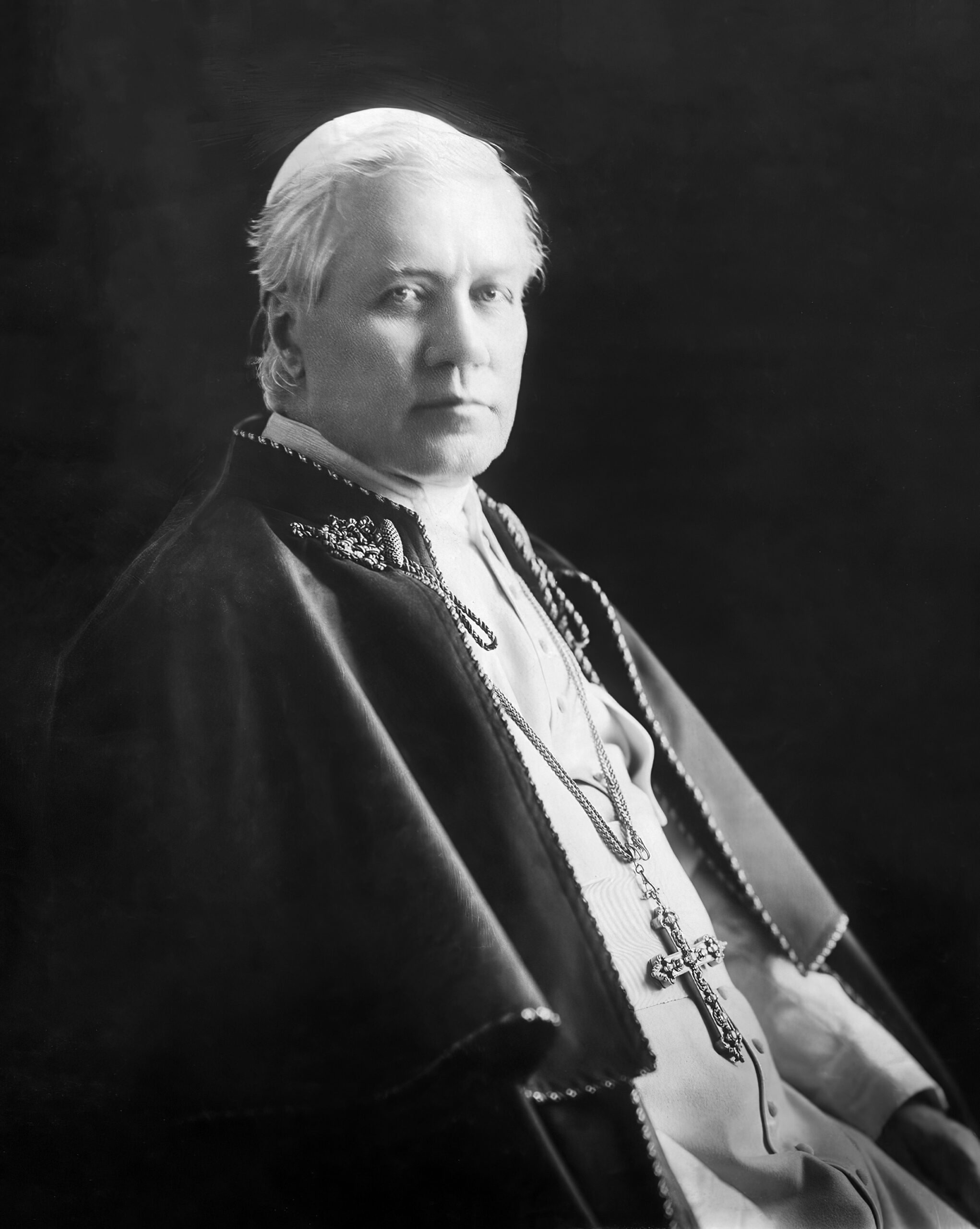
Saint Pius X, Pope and Reformer
Birth: June 2, 1835, Riese, Austrian Empire
Death: August 20, 1914, Rome, Italy
Saint Pius X, born Giuseppe Melchiorre Sarto, served as pope from 1903 until 1914 and was known for his pastoral simplicity, liturgical reforms, and strong defense of Catholic doctrine. He was born into a poor rural family in what is now northern Italy, the son of a village postman and a seamstress. Despite financial hardship, the young Giuseppe demonstrated intellectual promise and deep piety from a young age. Ordained a priest in 1858, he served in parish ministry before becoming bishop of Mantua and later Patriarch of Venice.
As pope, Pius X sought to renew Catholic life through reforms centered on holiness, catechesis, and worship. His motto, “To restore all things in Christ,” guided his pontificate. He encouraged frequent reception of Holy Communion and lowered the age for First Communion so that children could receive the Eucharist earlier. He also initiated major reforms of sacred music and the Roman Breviary, emphasizing active participation in the liturgy. Deeply concerned about theological errors, he strongly opposed Modernism, which he viewed as undermining essential Catholic teachings.
Pius X governed during a period of increasing political instability in Europe leading up to the First World War. Though often portrayed as stern in doctrinal matters, he was personally humble, charitable, and accessible to ordinary people. He reportedly predicted that he would not survive the outbreak of a great European war and died shortly after World War I began in 1914. Canonized in 1954 by Pope Pius XII, he was the first pope canonized since Pius V in the sixteenth century.
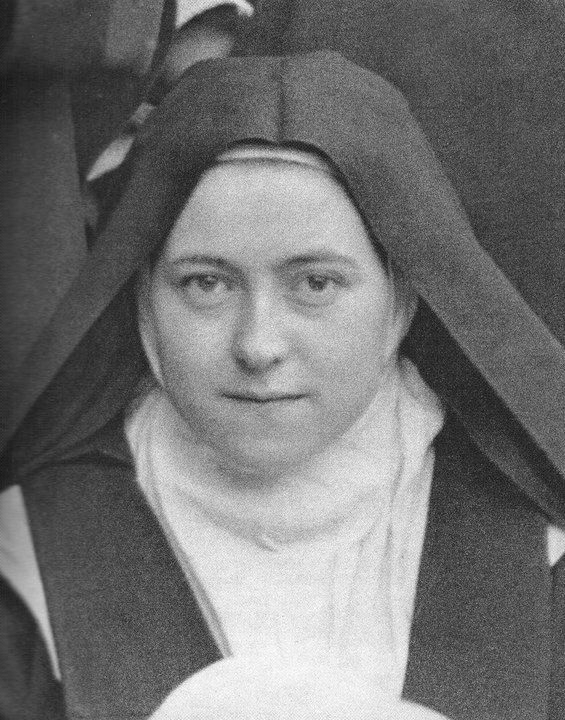
Saint Thérèse of Lisieux, French Carmelite nun and Doctor of the Church
Birth: January 2, 1873, Alençon, France
Death: September 30, 1897, Lisieux, France
Saint Thérèse of Lisieux, also known as “The Little Flower,” is perhaps one of the most beloved saints of modern Catholicism despite dying in relative obscurity at only twenty-four years old. Born Marie Françoise-Thérèse Martin into a deeply devout French family, she was the youngest of nine children, five of whom survived to adulthood and entered religious life. Thérèse displayed exceptional sensitivity and religious fervor from childhood, though she also struggled with emotional fragility following the death of her mother when she was four years old.
Determined to dedicate herself completely to God, Thérèse entered the Carmelite convent at Lisieux at the unusually young age of fifteen after personally petitioning Pope Leo XIII during a pilgrimage to Rome. Within the cloister she lived a hidden life of prayer, sacrifice, and ordinary work. Rather than pursuing extraordinary penances, she developed what she called her “Little Way,” a spirituality centered on childlike trust in God, humility, and sanctity through small acts of love performed with great devotion.
During her final years Thérèse suffered intensely from tuberculosis and spiritual darkness, yet continued to trust in God’s mercy. At the request of her superiors she wrote her autobiography, later published as Story of a Soul, which spread rapidly after her death and inspired millions worldwide. Canonized in 1925 by Pope Pius XI and declared a Doctor of the Church in 1997 by Pope John Paul II, Thérèse became patroness of missions despite never leaving her convent.
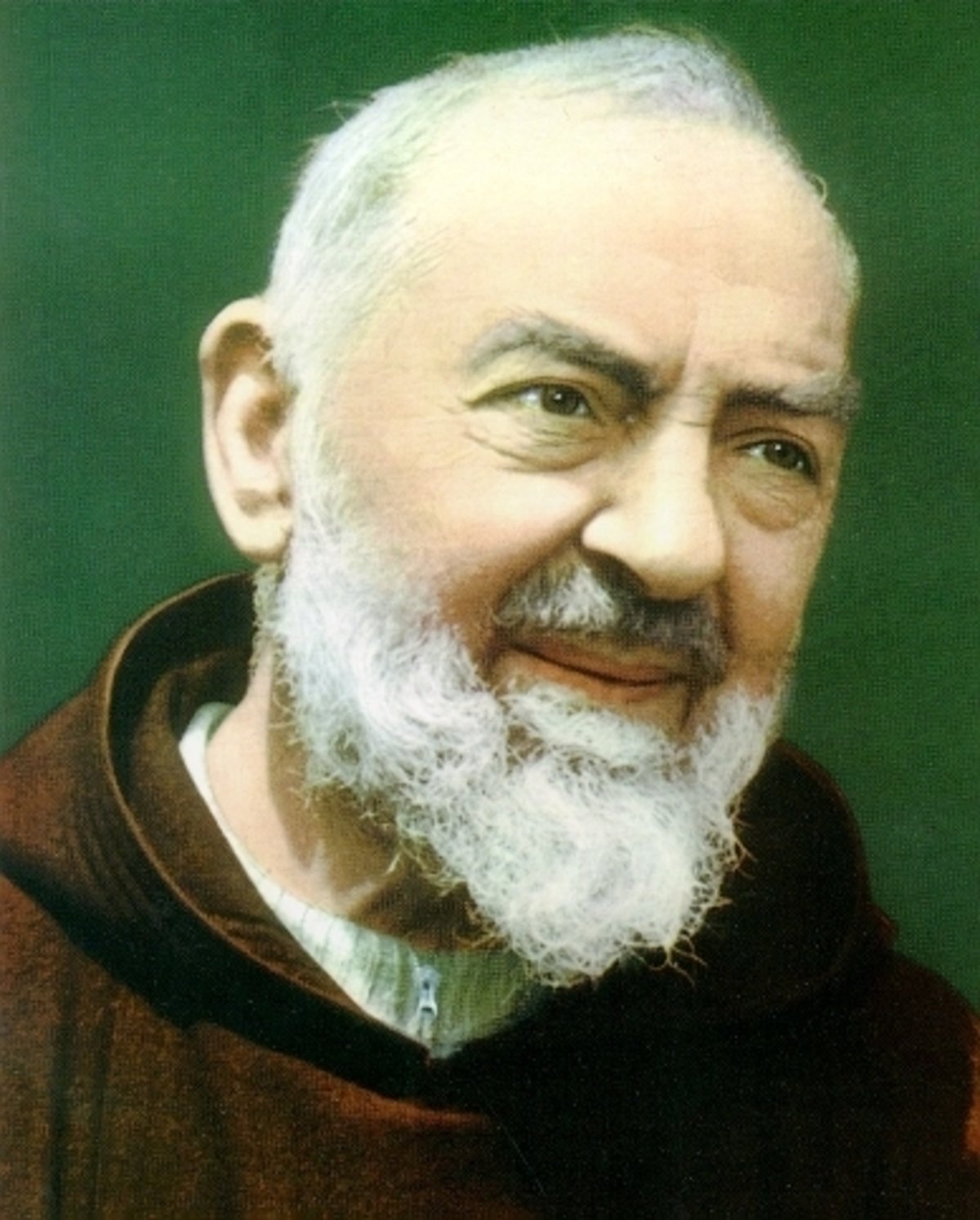
Saint Pio of Pietrelcina, Capuchin priest and mystic
Birth: May 25, 1887, Pietrelcina, Italy
Death: September 23, 1968, San Giovanni Rotondo, Italy
Saint Pio of Pietrelcina, widely known as Padre Pio, was an Italian Capuchin friar renowned for mystical experiences, spiritual counsel, and the stigmata. Born Francesco Forgione into a poor farming family in southern Italy, he exhibited deep piety from childhood and reported mystical visions even as a young boy. He entered the Capuchin order at age fifteen and was ordained a priest in 1910. Frail health marked much of his early life, but he became known for intense prayer and ascetic discipline.
In 1918 Padre Pio reportedly received the stigmata, the visible wounds corresponding to Christ’s crucifixion, making him one of the most famous stigmatics in modern history. Pilgrims traveled from around the world to seek his guidance in confession and spiritual direction. He spent extraordinarily long hours hearing confessions and became known for reading souls and calling penitents to sincere repentance. At the same time, he faced scrutiny and restrictions from Church authorities, who cautiously investigated reports surrounding his mystical experiences.
Padre Pio founded the Casa Sollievo della Sofferenza, a major hospital in San Giovanni Rotondo, reflecting his commitment to caring for the suffering. His spirituality emphasized prayer, penance, devotion to the Eucharist, and trust in God’s mercy. By the time of his death in 1968, he had become one of the most famous Catholic figures in the world. Canonized in 2002 by Pope John Paul II, Saint Pio remains one of the most widely venerated saints of the twentieth century.
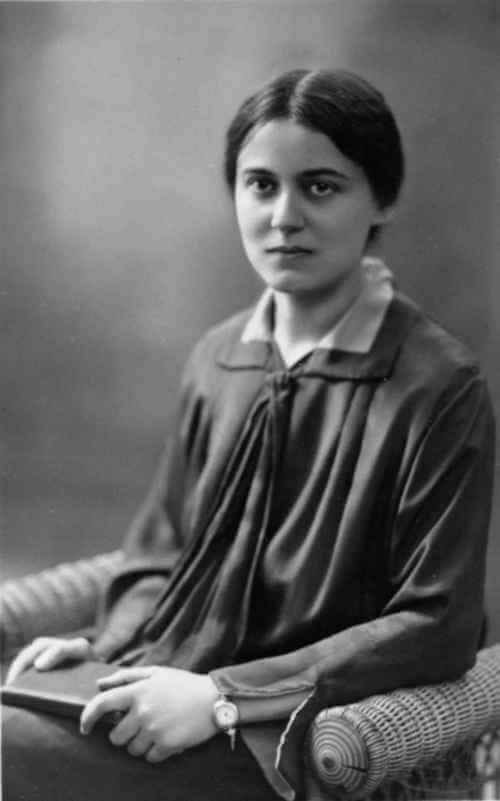
Saint Edith Stein, German Jewish convert and Carmelite martyr
Birth: October 12, 1891, Breslau, German Empire
Death: August 9, 1942, Auschwitz concentration camp, German-occupied Poland
Saint Edith Stein, also known by her religious name, Teresa Benedicta of the Cross, was a philosopher, Catholic convert from Judaism, Carmelite nun, and martyr of the Holocaust. Born into a devout Jewish family in Breslau, then part of the German Empire, she was intellectually gifted from a young age. Edith studied philosophy under the phenomenologist Edmund Husserl and became one of the first women in Germany to earn a doctorate in philosophy. Though she abandoned religious practice during adolescence and identified as an atheist for a time, she remained deeply engaged in the search for truth.
In 1921 Edith read the autobiography of Saint Teresa of Ávila, an experience that profoundly transformed her spiritual life. She converted to Catholicism in 1922 despite strong opposition from some family members. Edith subsequently worked as a lecturer and writer, engaging with questions of philosophy, faith, education, and the role of women in society. Later, she entered the Carmelite convent in Cologne in 1933, taking the name Teresa Benedicta of the Cross.
As Nazi persecutions intensified, Edith was transferred to a convent in the Netherlands, where it was thought she would be safer. But after Dutch bishops publicly condemned Nazi deportations of Jews, she and her sister Rosa were arrested in retaliation. They were deported to Auschwitz, where Edith died in a gas chamber in 1942. Canonized in 1998 by Pope John Paul II and later declared a co-patroness of Europe, Edith Stein is remembered for her witness to faith, intellectual integrity, and reconciliation between Jewish and Christian traditions.
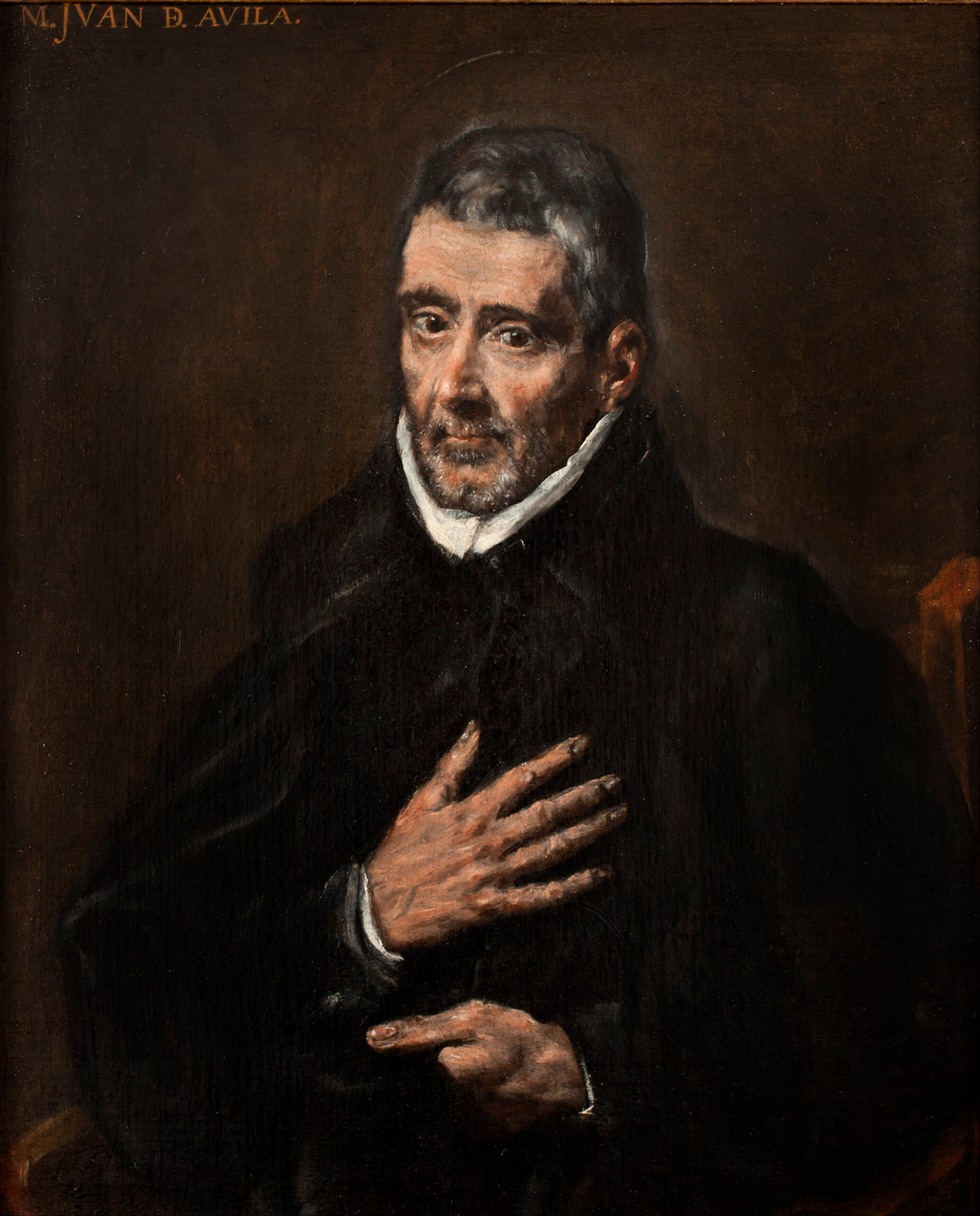
Saint John of Avila, Spanish priest and Doctor of the Church
Birth: January 6, 1499 or 1500, Almodóvar del Campo, Spain
Death: May 10, 1569, Montilla, Spain
Saint John of Ávila was one of the great spiritual masters and reformers of sixteenth-century Spain. Born into a wealthy family, he studied law before discerning a call to the priesthood. After ordination he intended to become a missionary to the Americas, but Archbishop Alonso Manrique persuaded him to remain in Spain, where his preaching quickly gained widespread attention. John became known for eloquent sermons calling for repentance, interior conversion, and authentic Christian living.
His ministry unfolded during a period of religious upheaval marked by the Protestant Reformation and internal calls for Catholic reform. John founded schools and colleges, promoted improved clerical education, and became a sought-after spiritual director. His correspondence and writings influenced many major Spanish saints, including Saint Teresa of Ávila, Saint John of the Cross, and Saint Francis Borgia. At one point he was briefly imprisoned by the Spanish Inquisition after being accused of doctrinal irregularities, though he was later exonerated.
John’s writings, particularly Audi, Filia (“Listen, Daughter”), became classics of Catholic spirituality emphasizing prayer, humility, and union with Christ. Despite poor health in later life, he continued preaching and guiding souls until his death in Montilla. Canonized in 1970 by Pope Paul VI and declared a Doctor of the Church in 2012 by Pope Benedict XVI, Saint John of Ávila remains an important figure in the history of Catholic reform and spiritual theology.
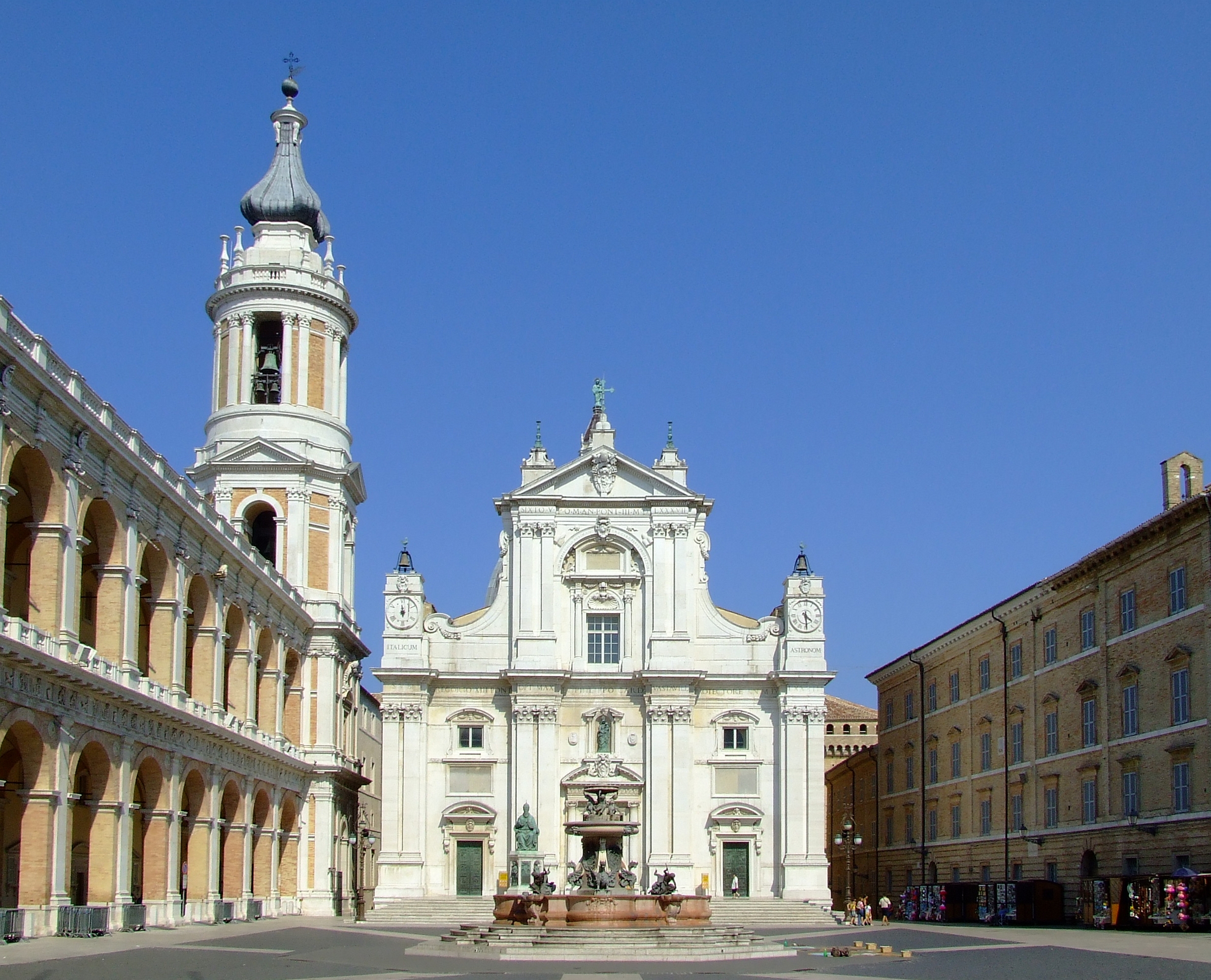
Holy House of Loreto
The Holy House of Loreto is one of the most important Marian shrines in the Catholic world and has been a major pilgrimage destination since the late Middle Ages. According to longstanding tradition, the house is the very dwelling in Nazareth where the Virgin Mary received the Annunciation from the angel Gabriel and where the Holy Family lived. Tradition holds that, as Muslim forces advanced in the Holy Land during the Crusader era, the house was miraculously transported by angels first to Dalmatia and then in 1294 to Loreto on Italy’s Adriatic coast.
Historical studies suggest that the structure likely arrived in Italy through human transport connected to the Byzantine Angeli family, whose name may have contributed to the legend of angelic translation. Architectural analysis has shown that the stonework of the house resembles first-century Palestinian construction and differs significantly from local Italian building styles. Over time the site became one of Europe’s great pilgrimage centers. Popes, saints, kings, and ordinary pilgrims traveled there seeking the Virgin Mary’s intercession.
A magnificent basilica was gradually built around the Holy House during the fifteenth and sixteenth centuries, incorporating Renaissance artwork and elaborate marble decoration designed by artists including Bramante. The shrine played an important role in Catholic devotional life, especially after the Counter-Reformation. Numerous saints, including Saint Francis de Sales, Saint Thérèse of Lisieux, and Saint John XXIII, visited Loreto. Today the Holy House remains a symbol of the Incarnation and of family life, drawing pilgrims from around the world to reflect on the hidden years of Jesus, Mary, and Joseph in Nazareth.
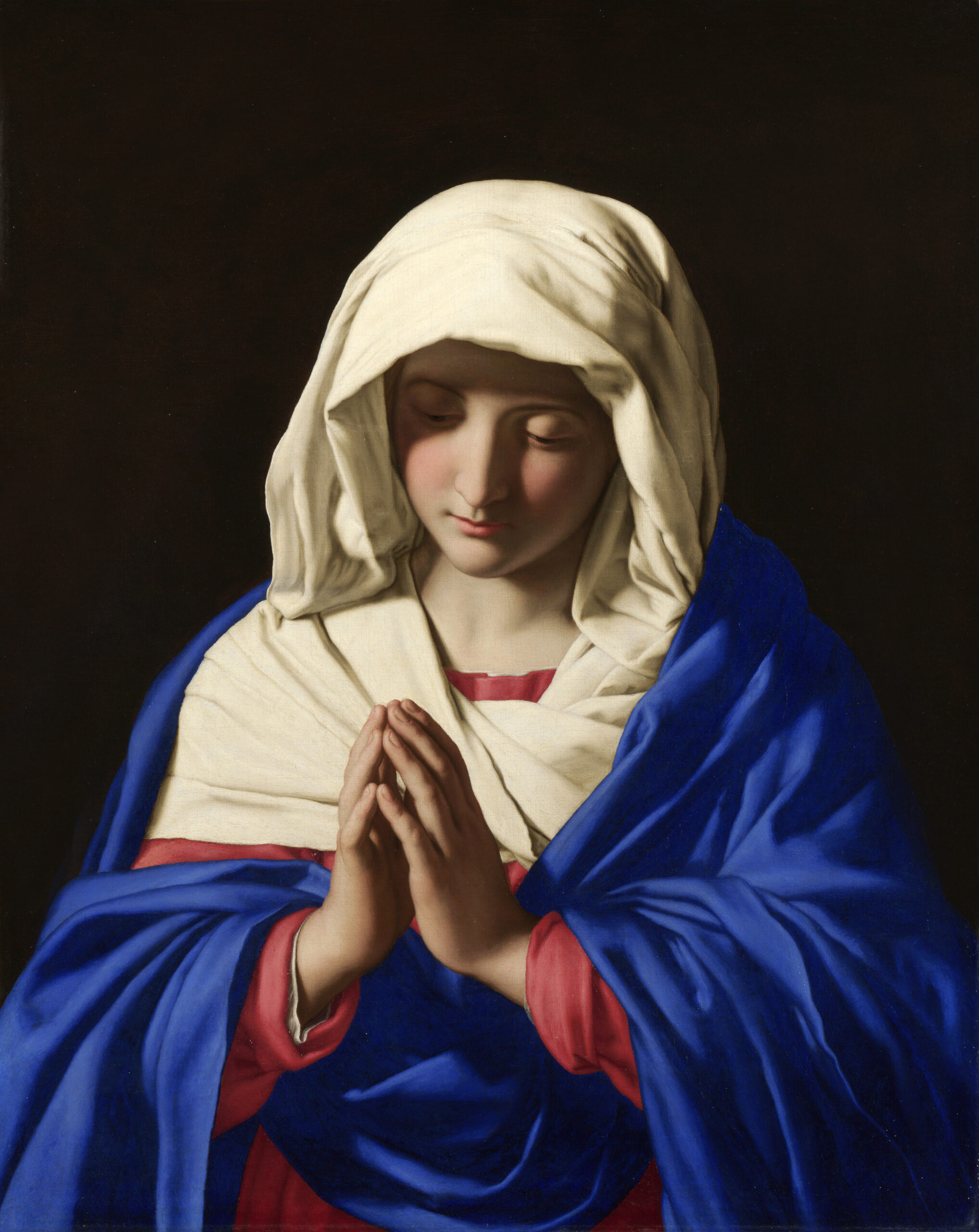
Blessed Virgin Mary
Birth: traditionally dated c. 20–18 BC, Nazareth or nearby in Galilee
Death: traditionally dated between AD 41–50, Jerusalem or Ephesus (according to differing traditions)
The Blessed Virgin Mary occupies a unique place in Christian history as the mother of Jesus Christ and the most revered woman in the Christian tradition. The canonical Gospels provide the principal historical sources for her life. Mary was a Jewish woman of Galilee, likely born during the final years of the Hasmonean or early Roman period in Judea. Christian tradition identifies her parents as Saints Joachim and Anne. She was betrothed to Saint Joseph when the angel Gabriel appeared to her at the Annunciation, announcing that she would conceive and bear the Son of God through the power of the Holy Spirit. Mary’s acceptance of this divine mission— “Let it be done to me according to your word”—became one of the defining moments in Christian salvation history. She subsequently traveled to visit her cousin Elizabeth, where she proclaimed the Magnificat, one of the most celebrated hymns of praise in Scripture.
Mary accompanied Jesus throughout the major events of his earthly life. She gave birth to him in Bethlehem during the reign of Herod the Great, presented him in the Temple, fled with him and Joseph into Egypt to escape Herod’s persecution, and later raised him in Nazareth. The Gospels depict her at key moments of Christ’s public ministry, including the wedding feast at Cana, where her intercession preceded Jesus’ first public miracle. Most significantly, Mary remained faithful at the foot of the Cross during the Crucifixion, where Jesus entrusted her to the care of the Apostle John. Following Christ’s Resurrection and Ascension, she appears among the disciples gathered in prayer before Pentecost. Ancient Christian tradition holds that she continued to support the early Church until the end of her earthly life. The doctrines of her perpetual virginity, divine motherhood, Immaculate Conception, and Assumption developed through centuries of theological reflection and were formally affirmed by the Church.
From the earliest centuries of Christianity, devotion to Mary became one of the most widespread expressions of Christian piety. The Council of Ephesus in 431 solemnly affirmed her title Theotokos (“God-bearer” or “Mother of God”), helping establish her central role in Christian theology. Throughout the Middle Ages, Marian shrines, pilgrimages, feasts, and artistic representations flourished across Europe and beyond. The Rosary, Marian processions, and countless churches dedicated to her became hallmarks of Catholic life. Marian apparitions reported at places such as Our Lady of Guadalupe, Our Lady of Lourdes, and Our Lady of Fatima have further strengthened devotion to her around the world. Popes, theologians, missionaries, and ordinary believers alike have regarded Mary as the model disciple, the spiritual mother of Christians, and a powerful intercessor before her Son.
Among the lesser-known but historically significant Marian devotions is veneration of the Holy Veil of the Blessed Virgin Mary. Devotion to her veil grew during the Middle Ages, as it came to symbolize Mary’s humility, purity, and maternal protection. Among many Catholics, devotion to the Holy Veil reflects a broader Christian desire to honor the hidden life of Mary and to contemplate the intimate humanity of the Holy Family through objects associated with their earthly lives.